Short answer: These are the questions Tampa Bay homeowners ask most often about short sales and selling before foreclosure in Florida. Each answer is general information; follow the links for more detail, and talk to a Florida attorney or tax professional about legal or tax questions.
Jump to: Selling before foreclosure · Approval, documents and liens · Credit, taxes and the remaining balance · Living in the home and other paths
Selling before foreclosure
Can I sell before foreclosure in Florida?
Generally yes. You remain the owner until the foreclosure sale is completed, and a sale that pays or satisfies the lender must close before the clerk files the certificate of sale. See selling before foreclosure.
How late can I be before foreclosure starts?
For most mortgages, federal rules prevent the first foreclosure filing until the loan is more than 120 days delinquent (12 CFR 1024.41(f)). Late fees and credit reporting can begin much sooner.
What happens after a lis pendens?
You are served with the foreclosure complaint and generally have 20 days to respond to the court. The case proceeds toward a possible final judgment and a clerk’s sale, usually set 20 to 35 days after judgment. See what is a lis pendens.
Can a short sale stop a foreclosure auction?
Not automatically. Only a closed sale that satisfies the lender, a court order, or the lender agreeing to postpone will stop an auction. Federal rules give some protection for complete loss-mitigation applications received more than 37 days before a sale. Talk to a Florida attorney if a sale date is set.
Approval, documents and liens
Can the bank reject a short sale?
Yes. A lender or investor can approve, counter or decline, and any second lienholder can refuse. Approval is never guaranteed.
What documents does a lender usually request?
Commonly a hardship letter, pay stubs or proof of income, tax returns, bank statements, a financial worksheet, the listing agreement, the purchase contract and a preliminary settlement statement. Your agent and attorney will tell you exactly what your lender wants.
What happens to a second mortgage or HELOC?
The second lienholder must agree to release its lien for less than it is owed. First-mortgage lenders often cap the amount that can go to the second lien, so negotiation is common.
What happens to HOA or condo liens?
Florida law makes a new owner jointly liable with the prior owner for unpaid assessments (Fla. Stat. 720.3085 and 718.116), so past-due association balances are typically paid or negotiated at closing.
Credit, taxes and the remaining balance
Does a short sale hurt my credit?
Yes, it is a negative credit event. Under Fannie Mae guidelines, the waiting period for a new conventional mortgage is generally 4 years after a short sale (2 with documented extenuating circumstances) compared with 7 years after a foreclosure. FHA and VA rules differ.
Do I have to pay the difference after a short sale?
It depends on the lender’s written approval. Some approvals waive the deficiency; others reserve it or require a contribution. Florida limits and time-bars some deficiency claims, but have a Florida attorney review the approval before you sign.
Is forgiven debt taxable?
It can be. Lenders may issue IRS Form 1099-C. The federal exclusion for forgiven debt on a main home does not apply to discharges after December 31, 2025 unless extended; other exclusions such as insolvency may apply. Ask a tax professional.
Living in the home and other paths
Can I stay in my house during a short sale?
Usually yes, until closing. You will need to keep the home showable and allow access for showings and the lender’s valuation.
What if my home has equity?
Then a traditional sale is usually the better path. You can pay off the loan and keep the remaining proceeds, and lenders generally will not approve a short sale on a home with equity.
Should I sell traditionally instead of doing a short sale?
If the sale price covers everything owed plus selling costs, yes in most cases: it is faster, needs no lender approval and avoids short-sale credit and tax issues. A current market analysis tells you which applies.
Is Monica an attorney?
No. Monica Karcz is a Florida Realtor and Senior Premier Agent with Redfin. She handles the real-estate side of a sale and works with attorneys and title companies; for legal advice, consult a Florida attorney such as her partner The Lyons Law Group or one you choose.
Have a question that isn’t here? Ask Monica privately.
Keep reading
- Short Sale & Pre-Foreclosure Help (overview)
- What is a short sale in Florida?
- How a Florida short sale works
- How long does a short sale take?
- Behind on your mortgage?
- Owe more than your home is worth?
- Short sale vs. foreclosure
Important: This page is general real-estate education, not legal, tax or credit advice. Monica Karcz is a Florida Realtor, not an attorney or accountant. Laws, lender programs and deadlines change and every situation is different — for legal questions talk with a Florida attorney, and for tax questions talk with a CPA or tax professional.
Sources
Laws and guidelines were reviewed in October 2026 and can change.
- 12 CFR 1024.41 – Loss mitigation procedures
- Fla. Stat. s. 48.23 – Lis pendens
- Fla. Stat. s. 45.031 – Judicial sales procedure
- Fla. Stat. Chapter 702 – Foreclosure of mortgages
- Fla. Stat. s. 720.3085 – HOA assessments
- Fla. Stat. s. 718.116 – Condominium assessments
- Fannie Mae Selling Guide B3-5.3-07
- IRS Publication 4681
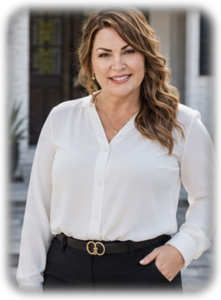
About Monica Karcz
Monica Karcz is a Florida Realtor and Senior Premier Agent with Redfin who has helped Tampa Bay buyers and sellers since 2012. She serves homeowners across Pasco, Pinellas, Hernando and Hillsborough Counties, including Holiday, New Port Richey, Port Richey, Hudson, Trinity, Tarpon Springs, Palm Harbor, Clearwater, Spring Hill and Wesley Chapel.
Monica assists homeowners with traditional home sales and with short-sale real-estate transactions, working alongside the homeowner’s lender, attorney and title company. She is a real-estate professional — not an attorney, accountant or financial adviser — and the information on this page is general education, not legal, tax or credit advice.
(813) 728-1400 · [email protected] · About Monica · Contact
Florida License #SL261098340 · Brokerage: Redfin Corporation, Florida License #780118